
The Miseducation of KPIs: K stands for Key

If you’ve worked in marketing for more than five minutes, you’ve probably heard someone call every metric under the sun a KPI. Page likes? KPI. Shares? KPI. Number of changes tracked on the campaign brief? Somehow, also a KPI.
The truth is, we’ve gotten to the point of becoming miseducated on what a KPI actually is. In the process, we’ve turned dashboards into laundry lists instead of decision-making tools. So let’s take a quick moment to set the record straight.
Breaking Down the Term
“KPI” stands for Key Performance Indicator. The emphasis is on Key. As in: essential, critical, top-priority.
A KPI is not every performance indicator you can possibly measure. If everything is a KPI, then nothing is. At that point, you’re just tracking everything you can find and hoping it adds up to a story, which rarely ever happens.
One more key detail: without goals, there are no KPIs. Goals define what matters, and KPIs tell you whether you’re moving the needle.
Where to Look, What It Means
This is where people often get tripped up. A KPI serves as the signal that tells you where to look to understand if your campaign is on track. That lets you know which levers to pull to affect change. But how do you know when you should pull them or in which way? That’s what benchmarks are for.
Benchmarks set the performance level that defines the success or failure of a KPI. They draw the line in the sand. Without a benchmark, a KPI is just a number on a dashboard. With a benchmark, you can clearly say, “Yes, we hit the mark” or “No, we need to adjust.”
For example, let’s say you’re running an email campaign with a goal to drive awareness and anticipation for an upcoming concert in a large venue prior to tickets going on sale.
- KPI: Email click-through rate
- Benchmark: 3% CTR
- Result: At 3.2% you’re doing well. At 0.5% you know there’s a problem.
The rest of your metrics are there to tell you why. Open rate speaks to whether the subject line did its job, heatmaps show where people clicked, and time on page tells you if the content kept them engaged. Those details give you the story around your KPIs.
Determining KPIs
KPIs depend on context. What makes sense for one campaign might be totally irrelevant for another. To show what that looks like in practice, let’s walk through three very different campaigns and see how their KPIs could line up with hypothetical goals.
1. Coca-Cola’s Orange Cream Van in Roku City

If you left your Roku screensaver running in the spring of this year, you might have noticed Coke’s Orange Cream van cruising around town. No link, no QR code, no CTA. Purely about brand presence.
- Possible Goal: Awareness and a spark of curiosity that leads people to search for the new flavor
- The real KPIs:
- Click-through rate on SEM ads for “Coca-Cola Orange Cream”
- Traffic change on Coca-Cola’s homepage compared with pre-ad baseline
- Supporting Metrics:
- Orange Cream flavor sales during ad period
- Social chatter or mentions of “Orange Cream Coke”
2. Liberty Mutual’s Limu Emu Campaign
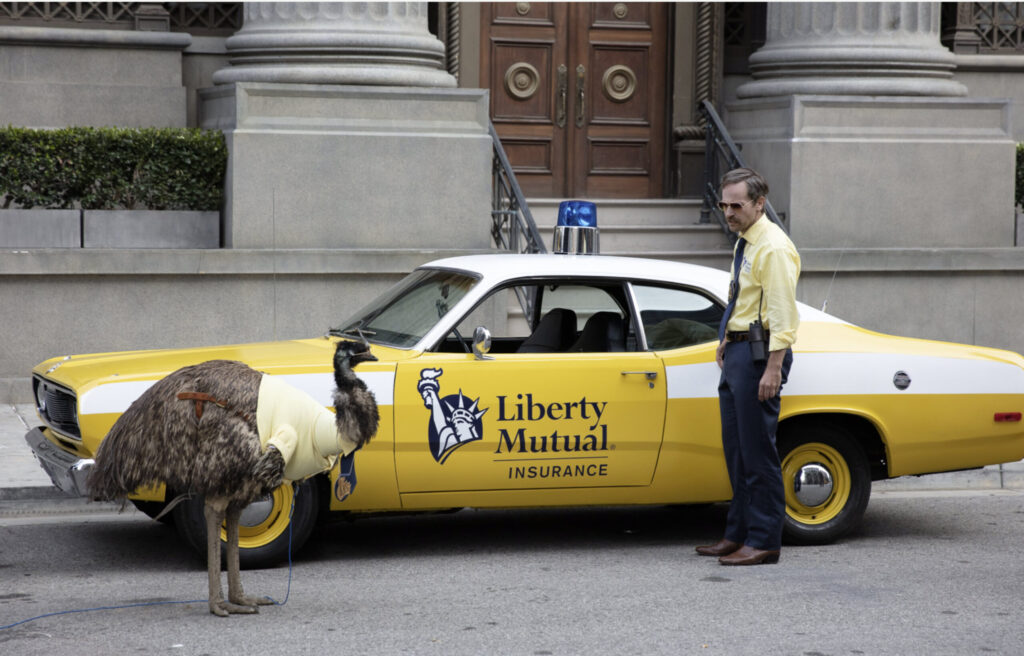
Doug isn’t just there for comic relief. In the ads, he shares that, “Limu and I help people save hundreds by customizing car insurance with Liberty Mutual.” That puts the spotlight on a specific product and their proposed competitive advantage.
- Possible Goal: Drive lift in auto insurance premiums by tying Liberty Mutual’s brand recognition to customization and savings
- The real KPIs:
- Quote requests during the campaign period
- Policy conversions or new premiums written that can be linked back to the ad window
- Supporting Metrics:
- In-ad engagement on streaming platforms
- Traffic bumps to auto insurance product page during the run
- Cost-per-lead to quantify return-on-ad-spend (ROAS)
3. Hair Loss Billboard Featuring Brian Urlacher

The billboard is simple but striking: former Chicago Bears linebacker Brian Urlacher, restored hair on full display, the cheeky “Hair Lacher” tagline, and the restorehair.com URL. Urlacher’s head prominently serves as the call-to-action.
- Possible Goal: Build awareness and credibility by leveraging Urlacher’s local celebrity status while driving more people to check out Restore Hair online
- The real KPIs:
- Geographic lift in traffic from the Chicago metro area
- Number of earned media pickups or impressions (ex. CBS featured a story on the billboards)
- Supporting Metrics:
- Consultation requests or form submissions that originate from homepage visits
- Website traffic attributed to the direct URL
- Engagement on social channels
These examples show how the goal always dictates the KPI. Coca-Cola wasn’t chasing clicks on Roku, Liberty Mutual wanted more than laughs, and Restore Hair leaned on local celebrity recognition to expand their market. The other metrics help fill in the rest of the story. They explain why a KPI landed where it did, but the KPIs themselves are the compass that keeps a campaign pointed in the right direction.
Key Things to Remember
At its core, getting KPIs right is about discipline. Just because you can measure something doesn’t mean it deserves to be called a KPI. The way to stay on track is to pressure-test metrics against three simple questions:
- Is it directly tied to a defined goal?
- Is it one of the top 1-2 things that tell you if you’re succeeding or failing?
- Does it have a benchmark attached to it?
If the answer isn’t “yes” to all three, it’s not a KPI. And that’s okay, it might still be a valuable metric that fills in the story. But when you treat KPIs as the few key signals they’re meant to be, you’ll stop drowning in data and start steering campaigns with clarity and confidence.